Introduction
In 2026, mobile apps are no longer a “nice-to-have” — they are a business necessity. Whether you run an eCommerce store, a service business, a startup, or an enterprise, choosing the right type of mobile application can directly impact your user experience, customer retention, performance, and long-term cost.
One of the biggest questions businesses still ask is:
Should we build a Hybrid Mobile App or a Native Mobile App?
At Hiray SofTech, we help businesses across India and globally choose the best mobile development approach based on goals, budget, features, and scalability. This guide will help you make the right decision in 2026.
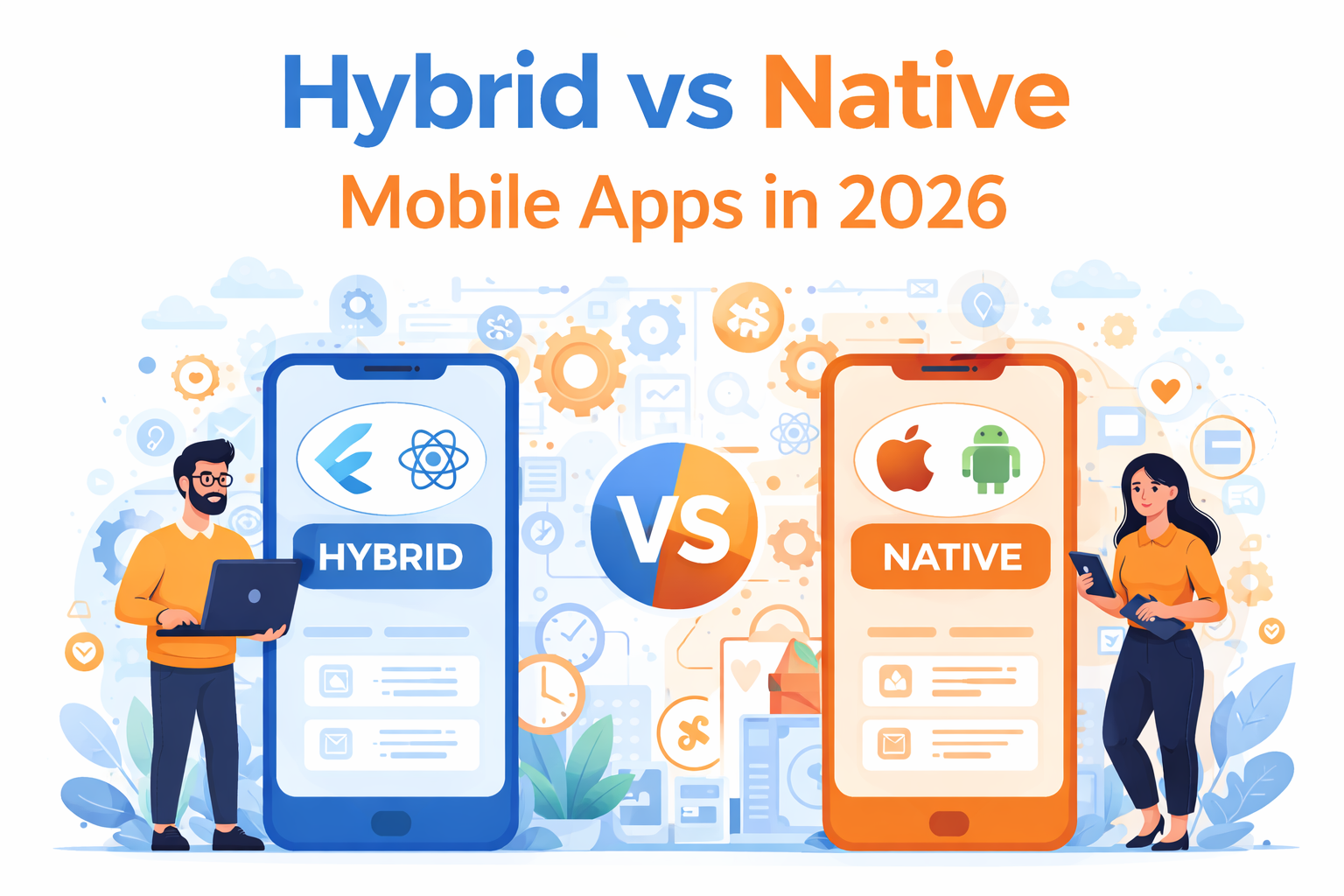
What is a Native Mobile App?
A Native App is built specifically for a single operating system — either Android or iOS.
Native apps are developed using:
Because native apps are built specifically for one platform, they provide the best performance and full access to device features.
Native App Advantages
✅ High performance & speed
✅ Smooth UI/UX experience
✅ Best for complex apps
✅ Better security
✅ Full access to phone hardware (camera, Bluetooth, sensors, GPS, etc.)
Native App Limitations
❌ Higher development cost
❌ Separate development for Android & iOS
❌ Longer time-to-market
What is a Hybrid Mobile App?
A Hybrid App is built once and runs on both Android and iOS using a single codebase.
Hybrid apps are developed using:
In 2026, Flutter and React Native dominate hybrid app development because they provide near-native experience and faster delivery.
Hybrid App Advantages
✅ Faster development
✅ Lower cost
✅ One codebase for Android + iOS
✅ Easier maintenance
✅ Ideal for MVP and startups
Hybrid App Limitations
❌ Slight performance limitations for heavy apps
❌ Complex animations may need native support
❌ Some device-level features may require extra plugins
Hybrid vs Native Apps in 2026: Key Differences
Here’s a simple comparison to help you understand what matters most:
1) Performance
If your app needs high-speed processing, heavy graphics, or real-time operations, native apps win.
Native is best for:
Hybrid apps in 2026 are still powerful, but native apps remain superior for extreme performance.
2) User Experience (UI/UX)
Native apps provide the most seamless UI experience because they follow platform-specific design standards.
Hybrid apps are now very smooth, especially with Flutter, but some apps still feel slightly “uniform” across platforms.
3) Development Cost
This is one of the biggest deciding factors.
Hybrid apps are more budget-friendly because one development team can build for both Android and iOS.
Native apps cost more because you typically need:
4) Development Time
If your goal is to launch quickly, hybrid apps are the clear winner.
In 2026, businesses are competing on speed, and hybrid apps allow you to:
5) Maintenance & Updates
Hybrid apps are easier to maintain because changes are made once and updated across both platforms.
Native apps require separate updates and bug fixes for Android and iOS.
When Should You Choose a Hybrid Mobile App?
Hybrid apps are perfect in 2026 if:
✅ You want a fast app launch
✅ You have a limited budget
✅ You need an MVP for a startup
✅ Your app is content-based
✅ You want Android + iOS together
✅ Your app does not need heavy device-level operations
Best Hybrid App Use Cases
At Hiray SofTech, most startups and small-to-mid businesses prefer hybrid apps because they balance cost, speed, and performance.
When Should You Choose a Native Mobile App?
Native apps are best in 2026 if:
✅ You need maximum performance
✅ Your app uses advanced phone hardware
✅ You need high-level security
✅ You want the best UI/UX possible
✅ Your app includes complex real-time features
Best Native App Use Cases
If your business wants a premium mobile experience with long-term scalability, native development is often the best investment.
The 2026 Trend: Hybrid Apps Are Getting More Powerful
The biggest shift in 2026 is that hybrid app frameworks like Flutter and React Native have improved massively.
Hybrid apps now offer:
This is why many businesses in 2026 choose hybrid apps first, then later upgrade specific features to native when needed.
How to Decide: 5 Questions to Ask Before Development
Here are 5 practical questions to decide between hybrid and native:
1) What is your budget?
If you want a cost-effective solution, go hybrid.
2) How quickly do you want to launch?
If speed matters, go hybrid.
3) Will your app require advanced device features?
If yes, native may be better.
4) How complex are the features?
For high-complexity apps, native is safer.
5) Is this an MVP or a long-term product?
MVP → Hybrid
Long-term enterprise-grade product → Native
Why Choose Hiray SofTech for Mobile App Development in 2026?
At Hiray SofTech, we build both hybrid and native mobile apps based on your business goals. Our development process focuses on:
Whether you need a Hybrid App Development Company in India or a team for Native Mobile App Development, we deliver solutions that are built for growth.
Final Thoughts
Choosing between a hybrid and native mobile app in 2026 depends on your business needs, budget, performance requirements, and long-term plans.
If you want:
If you want:
Need expert guidance? Hiray SofTech can help you choose the right approach and build a powerful mobile app that supports your business growth.

hybrid apps, native apps, mobile app development, Flutter development, app performance
hybrid apps, native apps, mobile app development, Flutter development, app performance
hybrid apps, native apps, mobile app development, Flutter development, app performance
Copyright © 2015. All rights reserved.